
What are key performance indicators (KPIs) in communication and marketing?
A deep understanding of the nature and role of KPIs is essential to justify actions, guide strategies and accurately measure the impact of your communication efforts. KPIs are indispensable tools that help assess the effectiveness of your communication and marketing strategies. These tangible figures highlight your progress toward specific strategic objectives.
Why are KPIs important?
They act like a GPS, steering your efforts and indicating whether you are on the right track. Without them, it is impossible to evaluate the success of your strategies. Analyzing results without KPIs would be like navigating without a compass.
Must-have KPIs in communications
Assessing message scope through reach and impressions
Reach refers to the number of unique individuals who could have seen your content, while impressions reflect the total number of times your content has been exposed to people, including repeat views by the same person. In the realm of communications and marketing, impressions count each time a message (or any communication material) is shown to the target audience. One impression is recorded every time an ad appears in front of a user, regardless of the resulting behaviour. This metric measures the overall visibility of a campaign rather than its engagement or effectiveness.
Reach and impressions are directly tied to the visibility of a brand or product. By measuring how often an ad is seen (impressions) and how many unique people see it (reach), businesses can estimate how many consumers are exposed to their message. Increased visibility is often the first step toward enhanced brand recognition. By analyzing reach and impressions, companies can assess the effectiveness of their advertising investment — for example, through examining the cost per thousand impressions (CPM).

Brand awareness: tracking recognition over time
Brand awareness can be evaluated in several ways, including tracking mentions. A brand with repeated visibility — whether through traditional or social media — is more likely to come to mind when a need arises. Of course, that awareness must also be positive.
To effectively measure brand awareness, it is important to use a variety of methods and KPIs to gain a full picture of how the brand is perceived and present in the public eye. Key approaches include:
- Monitoring the frequency of mentions across social networks and other digital platforms using dedicated monitoring tools.
- Evaluating media coverage, including the volume and tone of brand appearances across traditional and digital outlets.
- Measuring share of voice, comparing a brand’s presence to that of competitors within their industry.
- Calculating media impressions to determine how many times brand-related content was viewed or presented to consumers.
- Conducting surveys to assess brand recall — both unaided and aided — to gauge how memorable your brand is after interaction.
- Using surveys to analyze both spontaneous and prompted brand recognition, helping determine how deeply the brand is embedded in people’s minds.

Optimizing communications using time and reading metrics
It is important to break down reading and time-on-page metrics to fine-tune your communications. Time spent on a page, the bounce rate and video-viewing duration all provide insight into the effectiveness of your messaging.
Low interaction? Time to rethink your approach. High completion rates for reading or viewing? Your message is resonating with your audience.
Engagement rate: measuring audience interactions
Engagement rate is a strong indicator of the quality of your interactions with your audience. It is particularly important on social media. Likes, comments, and shares — more means your content is sparking interest. However, raw interaction numbers can be misleading, so it is important to contextualize them in relation to your total audience.
Depending on what you want to evaluate and the data available from platforms, engagement rate is typically calculated as total interactions divided by either reach or impressions and expressed as a percentage. To better assess a specific situation, you may base the engagement rate on reach or impressions and choose which interactions to include based on particular behaviours.
Interpreting engagement rates helps you understand your content’s performance on social media, the effectiveness of your online ads, or even the success of loyalty programs. A declining engagement rate should prompt a review of your strategy to enhance user interaction and interest.
To fully understand engagement rate, look beyond the numbers. A high rate suggests you are effectively connecting with your audience — but not all engagements are created equal.
Lots of shares and comments? That is a strong sign of meaningful engagement. Plenty of likes? That is good — but dig deeper.
Examine the context, trends and reactions. That is what will tell you if your content is truly making an impact.
Conversions: measuring specific actions triggered by your message
The conversion rate reflects how effective your call to action (CTA) is. Whether it is purchases, sign-ups, downloads, video views or time spent on a page, a high rate indicates that your message is compelling and your efforts are working. Like engagement, conversion numbers alone can be misleading when evaluating ROI. What matters is the proportion of conversions compared to your audience.
Conversion rate can also be calculated in various ways but is typically defined as the number of conversions divided by the number of people who initially engaged with the ad or communication. Depending on the tactic, this may vary if interactions cannot be tracked — such as with traditional media.
In many cases, you will also want to consider the cost per conversion to evaluate which tactics deliver the best ROI. This is calculated by dividing the total investment by the number of conversions, giving you a dollar figure for the cost per conversion.

Audience satisfaction and feedback
While quantitative data are important, they often are not enough to fully assess a situation, especially in communication and marketing where nuance matters. There is no substitute for listening carefully to your target audience. Their feedback reveals whether their expectations have been met. Listen closely: their comments are valuable insights to improve your future strategies.
Although your target audience and your customer base may overlap, they are not always the same. That is why measuring customer satisfaction is crucial — it goes beyond sales and reflects the strength of your relationship with them. A high satisfaction rate means your communication is landing effectively with your clients and helping build loyalty.
Return on investment (ROI): evaluating the financial efficiency of campaigns
Return on investment (ROI) is a key performance indicator that calculates the results compared to the amount spent on a marketing campaign or initiative. It is usually expressed as a percentage or ratio and is used to assess the financial success of marketing efforts and determine the return on marketing spend. Calculating ROI means quantifying campaign success in dollar terms — an essential goal in marketing that communication efforts often support. A positive ROI demonstrates concrete financial value and justifies your marketing investments.

How to measure the performance of a communications plan?
How do I choose the right KPIs for my business?
Take the pulse of your strategy. Choose KPIs aligned with your objectives that also offer fresh insights to support better decision-making. Good KPIs should drive action — not just measurement.
For more effective KPI selection, ask these key questions:
- What are your strategic goals (business, marketing, communications)? Choose KPIs that best reflect them. Shifting public perception requires different metrics than increasing sales.
- What industry are you in? Different KPIs are more relevant in different sectors.
- What are your main communication channels? Align your KPIs with the platforms you use.
- How do you define success? Your KPIs must answer this vital question.
Making smart decisions today sets the stage for better results tomorrow. Carefully select KPIs that align with your strategic objectives to ensure growth and success for your business.
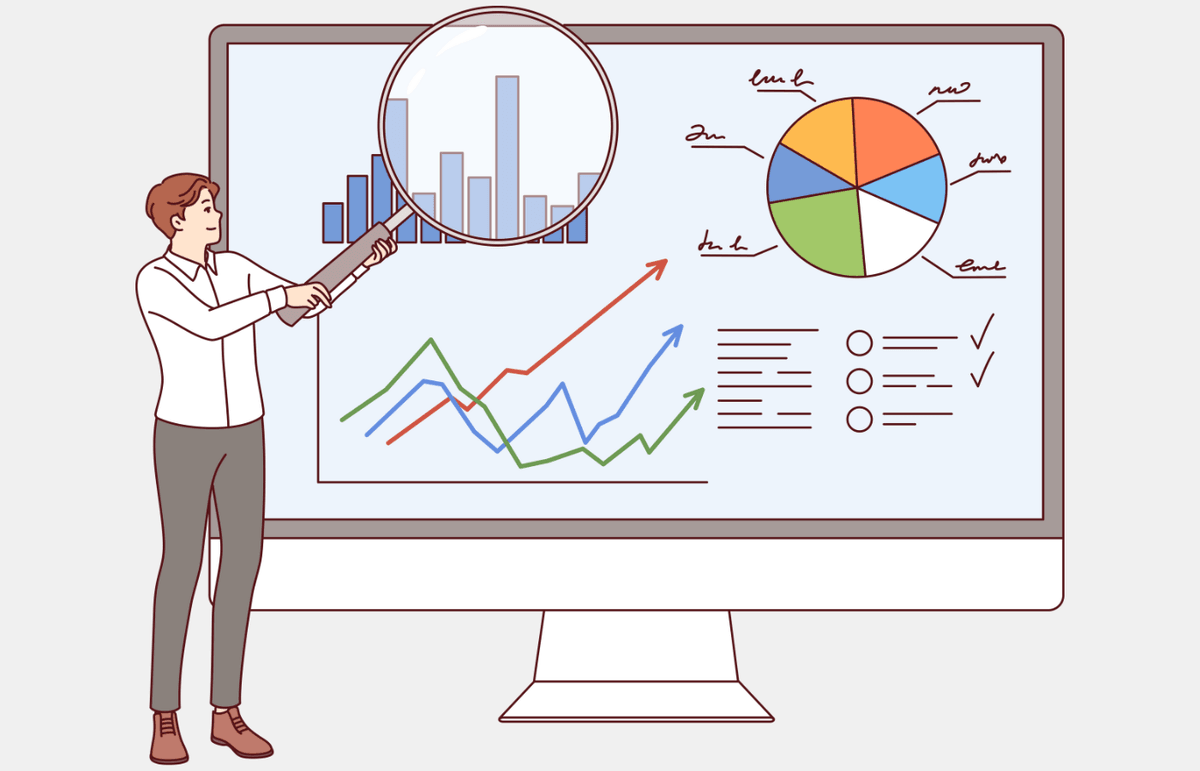
Incorporating consumer feedback for more complete message evaluation
Incorporating consumer feedback not only gives you a 360-degree view of your efforts but also leads to a deeper understanding of your performance. It allows you to keep what works and continue improving.
Positive feedback? Great — keep doing more of what works. Negative feedback? See it as a learning opportunity, not a failure! Use it to refine your messaging. Thoughtful, intentional communications always perform better.
How to effectively analyze performance indicators
Analyzing your KPIs is like decoding a secret message. Look for trends, compare data points, find the story they tell. That story will guide you toward targeted action and strategic adjustments.
Don’t forget to put data in context. Are they affected by external events? Are the variations seasonal? Informed interpretation turns raw data into winning strategies.
A good communications or marketing strategist will know how to uncover the story behind the data — and use it to drive meaningful solutions and growth opportunities.
Enjoyed this blog?
Continue reading with these related articles: